 English (UK)

 Almería, September 22nd, 2026
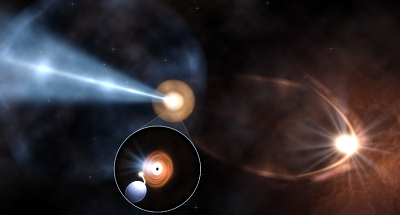
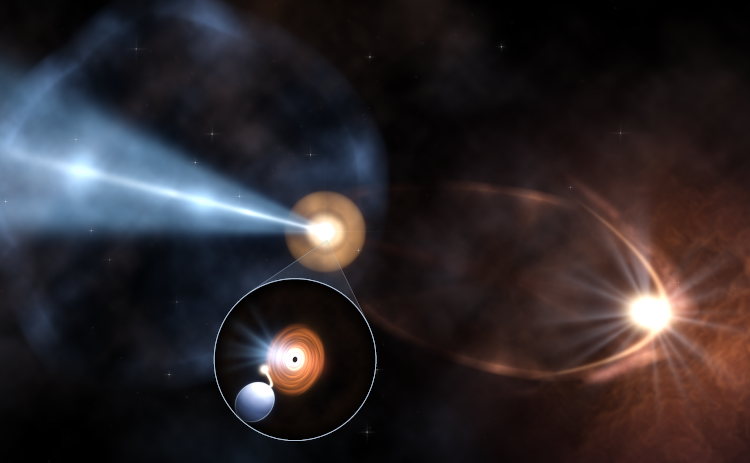
An international team led by astronomers from the University of Jaén (Spain) has found the object, hidden behind a cloud of interstellar dust about 12,000 light-years from Earth. The discovery was made after analysing a large dataset across various wavelengths, including spectra taken at Calar Alto. This first confirmed microblazar in the Milky Way consists of a star with a black hole orbiting it that triggers a jet of matter -at speeds close to the speed of light- almost directly toward our planet. Its opposite, invisible jet collides with a gas cloud and could be the source of some of the most energetic particles ever detected in the universe.
 |
Almería, July 17th, 2026
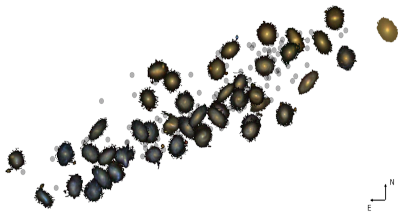
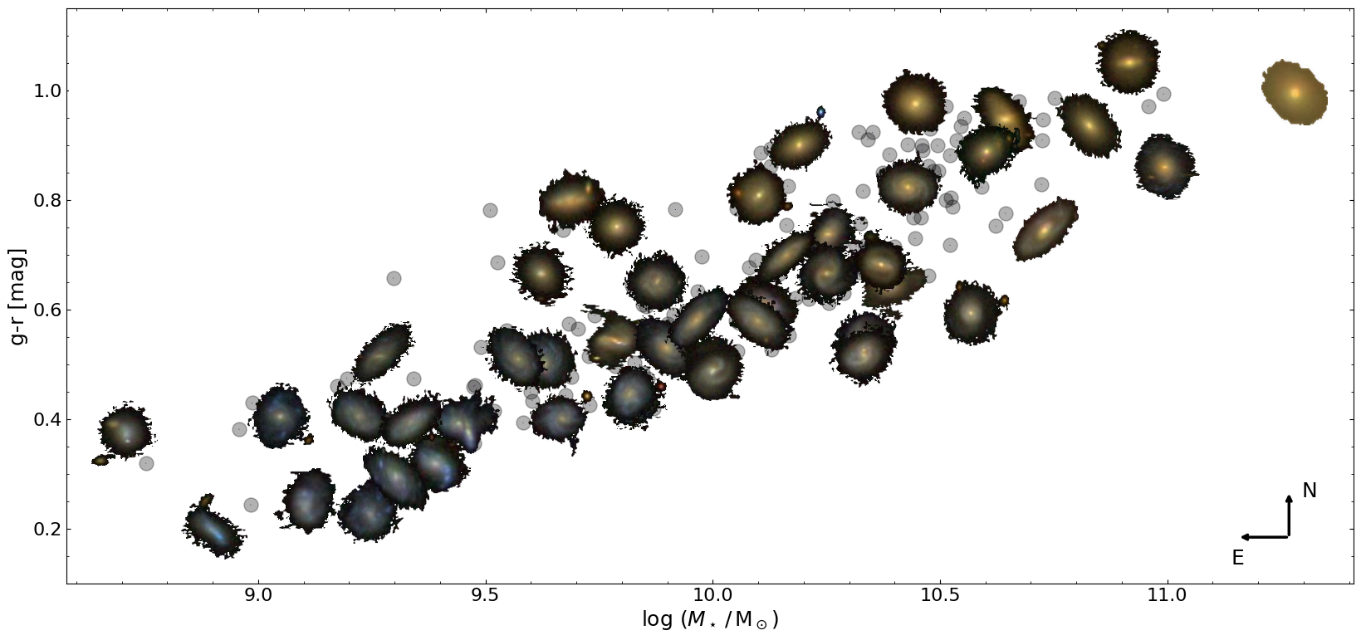
The large CAVITY project, led by the University of Granada, has released new data on 200 galaxies located in the lowest-density regions of the Universe, known as cosmic voids. The three-dimensional spectra of these galaxies, obtained at Calar Alto and available for download at https://cavity.caha.es, represent a legacy for cosmology.
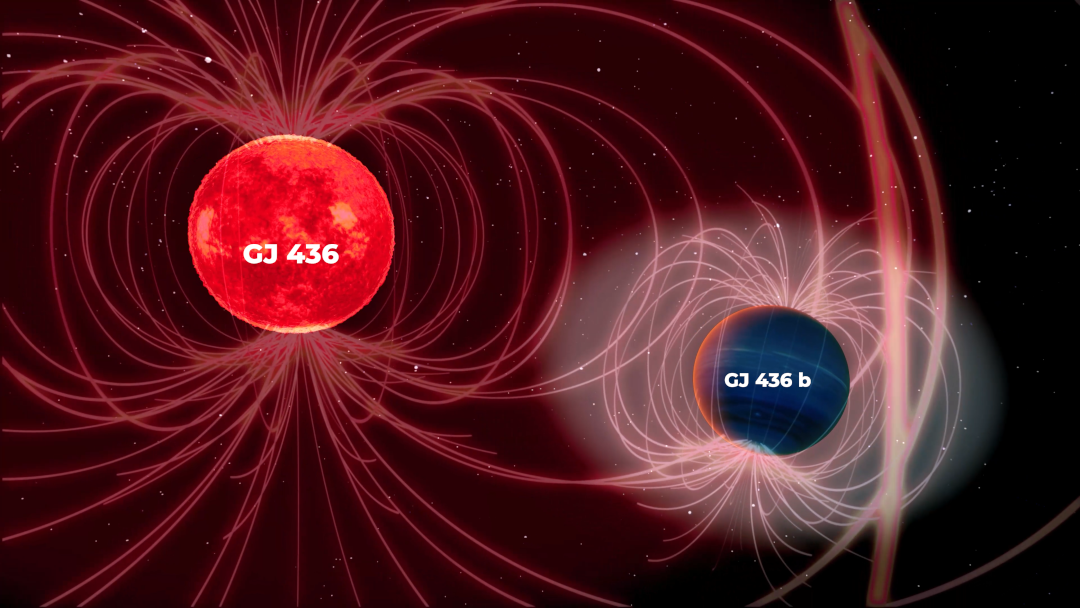 |
| Artist's illustration of the interaction star (GJ 436) - exoplanet (GJ 436 b). Credits: IAA-CSIC/LampScience |
Almeria, June 29th, 2026
An international team led by the Institute of Astrophysics of Andalusia (IAA-CSIC) has provided the first conclusive evidence of a planet’s influence on the behavior of its star. Observations conducted largely with the CARMENES instrument at Calar Alto Observatory have made it possible to detect and estimate the strength of the magnetic field of the exoplanet GJ 436 b, opening a new avenue for studying the habitability of planets outside the Solar System.

 Almería, 29 de may 2026
The Leibniz Institute for Astrophysics Potsdam (AIP) and the Calar Alto Observatory de Calar Alto celebrate the 25th anniversary of the PMAS instrument (Potsdam Multi-Aperture Spectrophotometer) at the 3.5-meter telescope. Nowadays, PMAS remains a highly competitive integral field spectrograph and it is the most productive visitor instrument at the observatory, approaching the 500 publications based on PMAS data.
Page 1 of 52